Joanna Fidducia
The Hole and the Mound: Gravity and Sociality in Allan Kaprow’s Yard
Abstract:
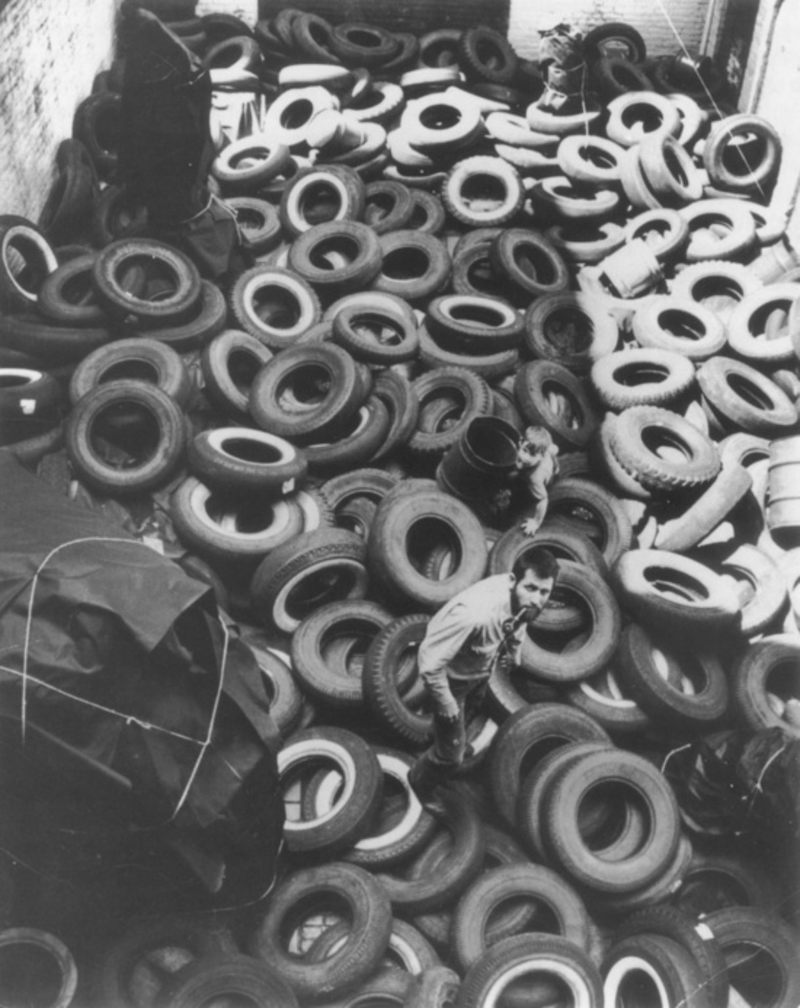
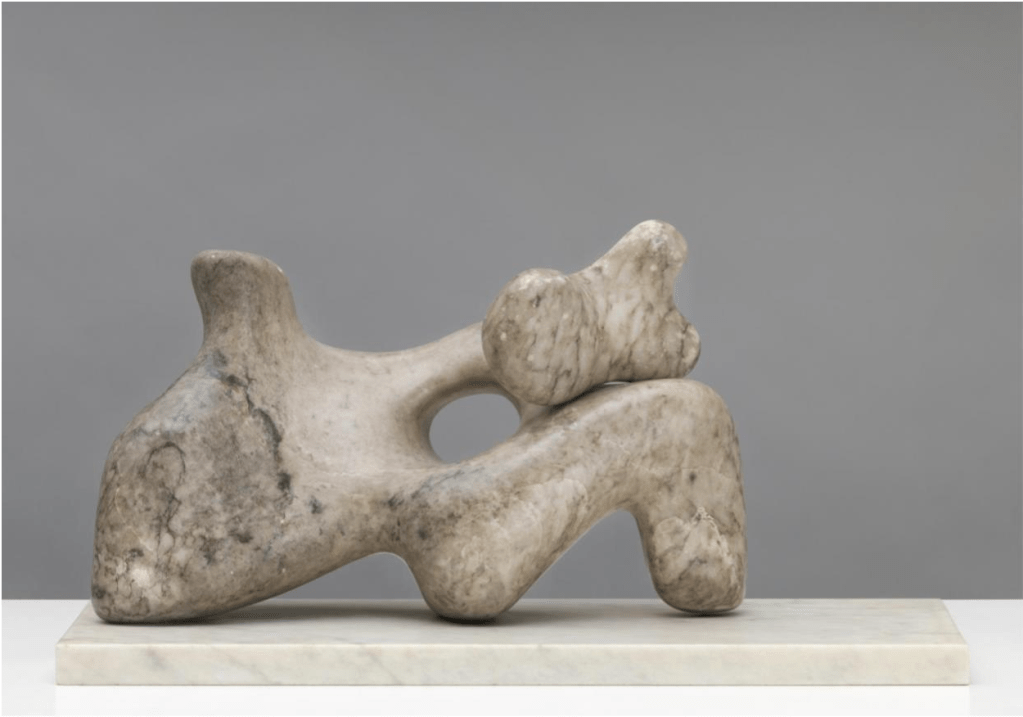
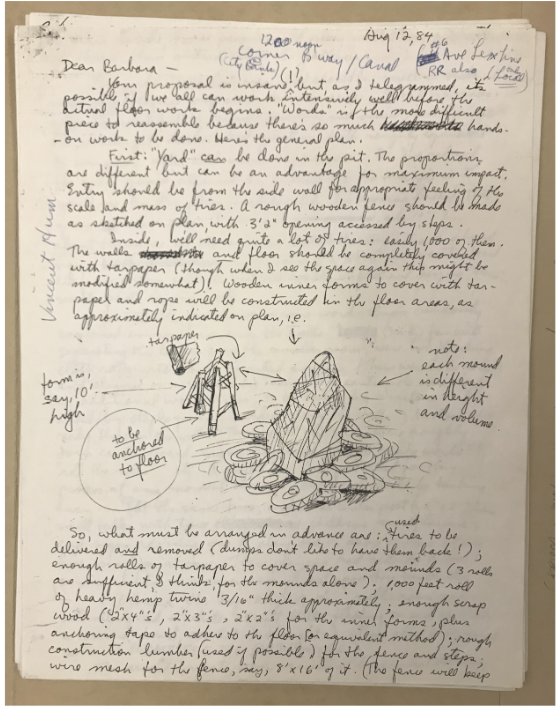
In 1961, the American artist Allan Kaprow installed Yard in the courtyard of the Martha Jackson Gallery in New York: a heap of more than two hundred used tires that transformed the brick patio into both junkyard and playground. As with other sculptural and para-sculptural practices of the 1960s and 70s, Yard’s openness was premised on the abandonment of the upright human figure as sculpture’s central theme. His environments had no bodies save for the viewers, who were free to rove and tumble over the uneven landscape of scattered tires. Yet among the tires were a series of tall, irregular forms swaddled in tar paper, concealing a collection of sculptures by Alberto Giacometti and Barbara Hepworth among others, which had been installed in Jackson’s courtyard. Kaprow called these forms “mounds” and reproduced them in every subsequent installation of Yard, thus preserving the opposition between the fallen, repetitive torus and the upright, unique solid, as well as between the viewer’s open-ended play with gravity and her encounter with a closed form that resists it. In this paper, I argue that the mounds haunt Yard as specters of modern sculpture that Kaprow negates but can never quite eradicate. They remain within his environment as a persistent postwar anxiety about the displacement of intimate relationships of likeness by new forms of aggregated, leveled-down collective identity
Biography:
Joanna Fiduccia is Assistant Professor of European modern art and the historical avant-garde at Yale University. Prior to Yale, she taught art history and humanities at Reed College. Her first book Figures of Crisis: Alberto Giacometti and the Myths of Nationalism (Yale University Press, 2026) considers the homologies between a central artistic crisis in modernism and the crises of national identity in modern Europe. Her research and art criticism have appeared in publications including Art History, October, Artforum, East of Borneo, and Parkett, and she has been awarded fellowships from the American Council of Learned Societies, the Terra Foundation, the Brown Foundation, the Swiss Confederation, and the Society of French Historical Studies.
 Home
Home 