
Edward S. Cooke, Jr
Ground and Bench: The Artisanal Body at Work
Abstract:
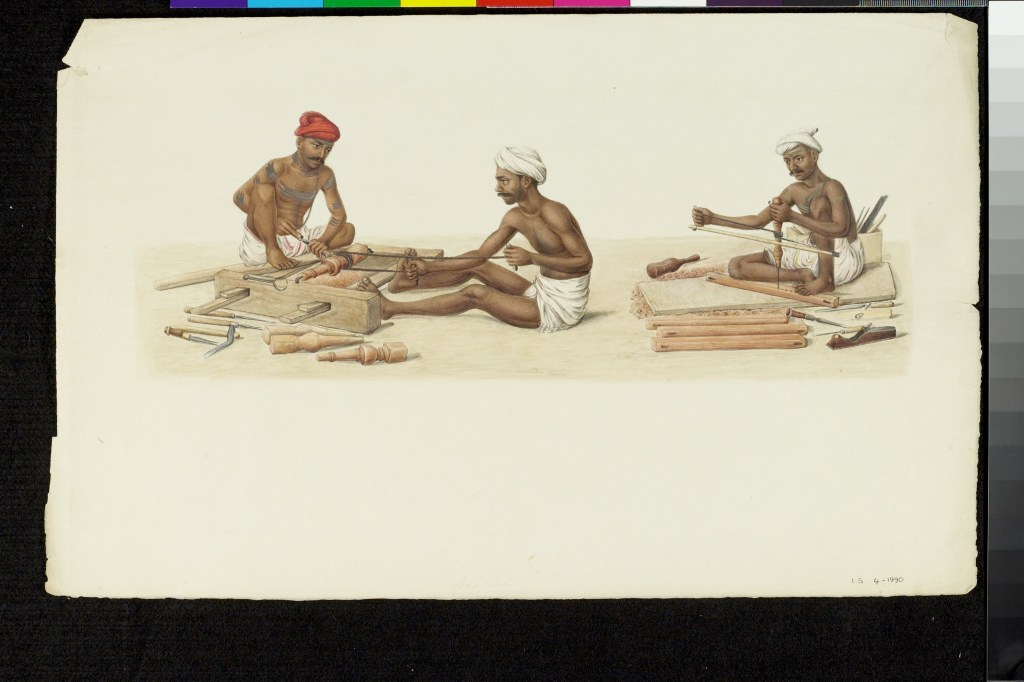
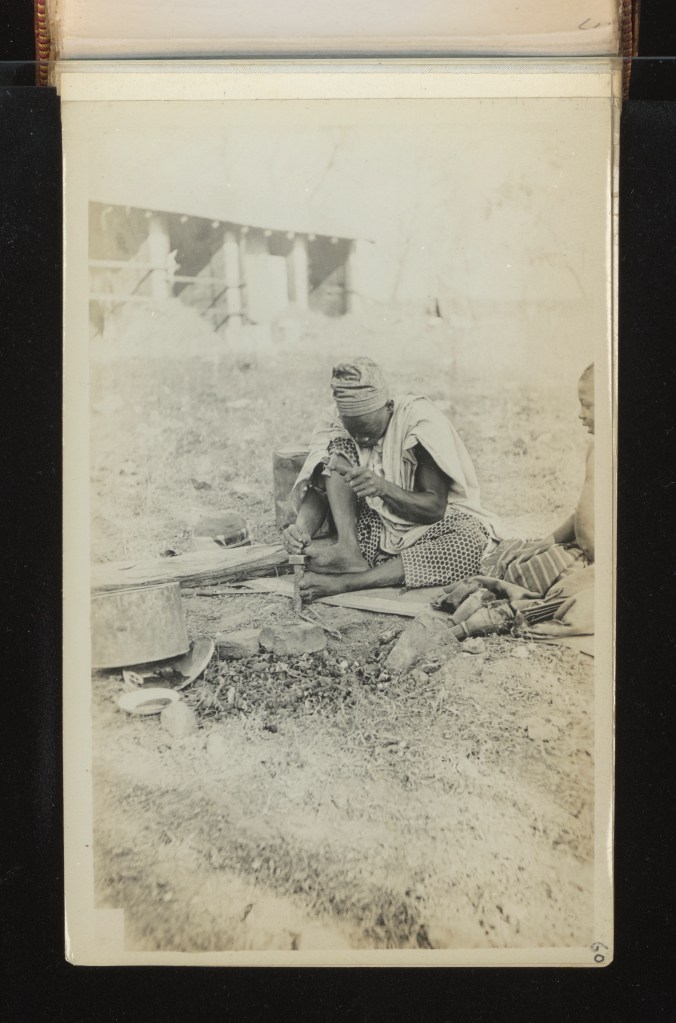
The illustrations accompanying Otto Salomon’s The Teacher’s Hand-Book of Sloyd (1891) emphasized that youth engaged in handwork should stand at a bench to do their work, regardless of the task. Throughout the 19th century, images of artisans in Europe and America depicted the noble craftsperson standing erect and attentive at their work bench, the products of a civilizing process that stressed the alertness and posture of an engaged citizen. To be upright while at work was to be culturally superior. Paintings, prints, and photographs of artisans from non-Western regions or from other ethnicities depicted the makers sitting on the ground. The assumption of this contrast is that they were quaint, base, or inferior. But is this colonial assumption of civilizing progress correct? Are there times when ground work is more appropriate economically, physically, ergonomically, or materially than bench work? Drawing on analysis of 19th-century firka sets of paintings that depicted South Asian artisans and British missionary photographs of African potters and metalworkers in the early 20th century, this essay seeks to push against the colonial perspective by revealing the advantages of ground work.
Biography:
Edward S. Cooke, Jr., the Charles F. Montgomery Professor of American Decorative Arts in the Department of the History of Art at Yale University, focuses upon material culture and decorative arts, especially from the 17th century to the present. His published articles and essays range from historical studies to contemporary engagements. His books include Making Furniture in Pre-industrial America: The Social Economy of Newtown and Woodbury, Connecticut (Johns Hopkins Press, 1996) and Inventing Boston: Design, Production and Consumption in the Atlantic World, 1680–1720 (Yale University Press, 2019), both of which focus upon the context of craftsman-client relations in colonial North America. His most recent book, Global Objects: Toward a Connected Art History (Princeton University Press, 2022), looks at the production, consumption, and circulation of functional aesthetic objects, tracing the social lives of objects from realization to purchase, and from use to experienced meaning.
 Home
Home 