
Quincy Ngan
Digging Malachite from the Ground: The Weight on the Body in 1980s China
Abstract:
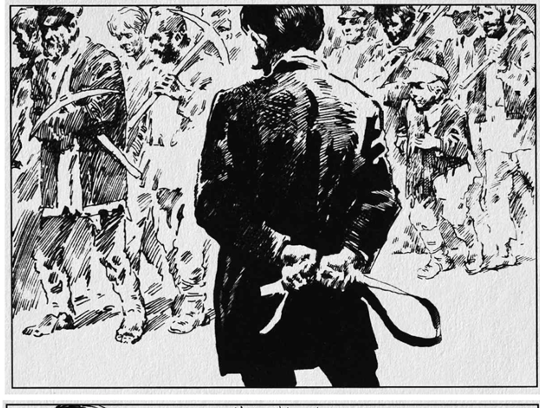
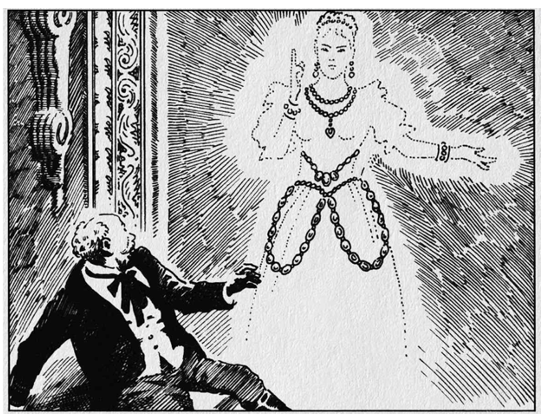
Published in China in 1984, The Malachite Box is a palm-size picture book based on Russian folktales. The book follows Stepan, an indentured miner of malachite, as he gains his freedom with the help of the Mistress of the Copper Mountain, a fairy in Russian folklore. It also traces how his daughter, the owner of a malachite box, exposes the exploitative weight of the aristocracy on the people during the twilight of the Romanov Empire. Aiming to cultivate morality among Chinese teenagers, the book stages class conflicts to glorify the labor and honesty of proletariat miners and the righteousness of Stepan’s daughter. The narrative of The Malachite Box echoes the Communist Party’s attempt to regulate people during the Anti-Spiritual Pollution Campaign of 1983, when a series of opening and reform policies inadvertently introduced ideologies that threatened societal stability. This essay joins a growing corpus of research that exposes the atrocity of extraction, revealing how the dynamics among miners, minerals, and the bourgeoise turn the body into a site of both torture and survival. From mining to prosperity to the Anti-Spiritual Pollution Campaign, the body in twentieth-century China was never free from societal, political, or economic control. The Malachite Box thus underscores the non-existence of a completely free body.
Biography:
Quincy Ngan is an assistant professor in the History of Art and a research fellow at the MacMillin Center at Yale University. His research focuses on the visual and material cultures of early modern China, with particular interest in Chinese painting, color, medium, materiality, body, drama, prints, words and images, and gender and sexuality. Titled The Matter of Color: Azurite Blue in Early Modern China, his first book project explores the remarkable life of azurite along the dynamics among modernity and socioeconomic changes, words and images, chromophobia and chromophilia, and spatiality and temporality. Blending scientific analysis of pigments and careful reading of artworks and historical records, this project shifts the conversation around Chinese painting away from traditional literati viewpoints and medium-specific approaches, challenging common assumptions about color as both a material and a field of study.
 Home
Home 